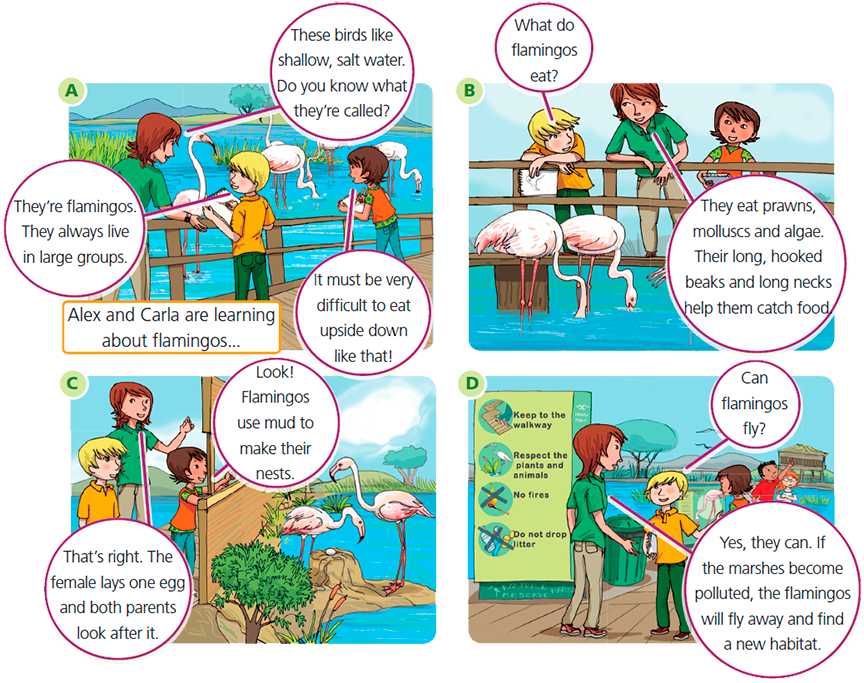
An ecosystem includes all the living and non-living things in a specific area and the interaction that occurs between them. Ecosystems have no definitive size. They can be as small as the space under a rock or as large as an ocean. A large ecosystem contains smaller ecosystems within it.
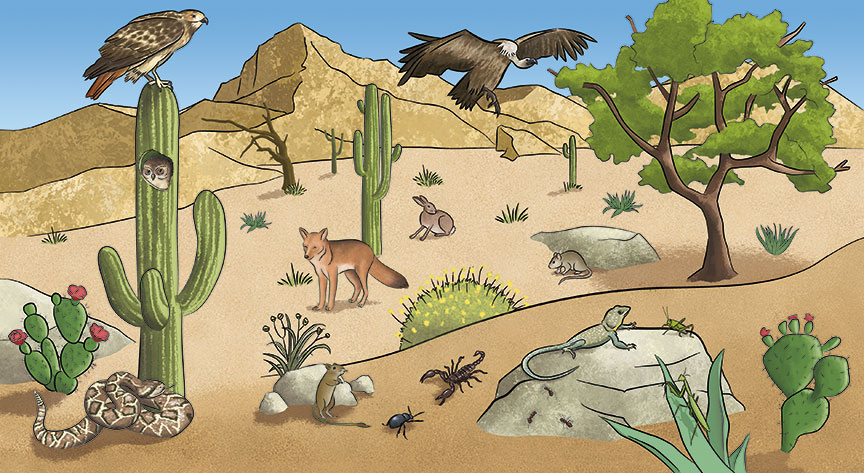
All plant life in an ecosystem is called the flora. All the animal life in an ecosystem is called the fauna. The other living things in an ecosystem are fungi, microorganisms from the Monera kingdom such as bacteria, and protists, which mostly live in water.
Organisms of the same species and that live in the same area are called a population. When populations interact with each other, they form a community. These communities interact with each other and with the physical environment.
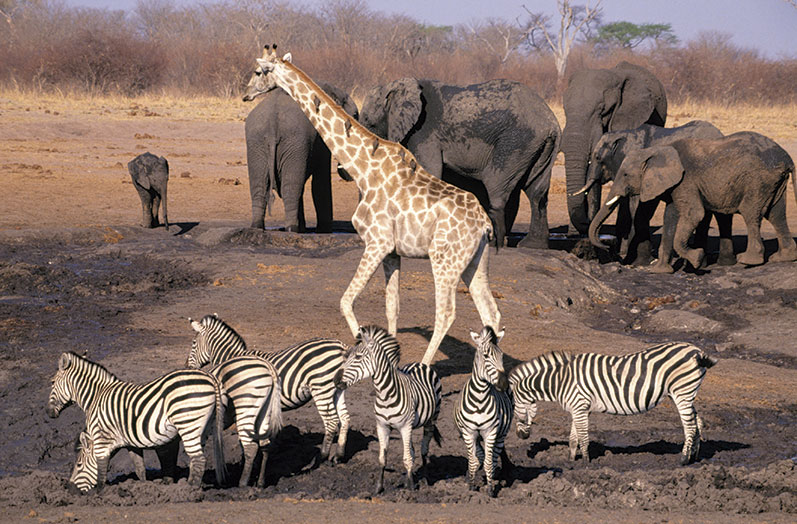
Physical environment
An environment is made up of non-living things that appear in the same area as living things. Non-living things in an environment include:
- air
- sunlight
- water
- temperature
- soil (with rocks and minerals)
- climate
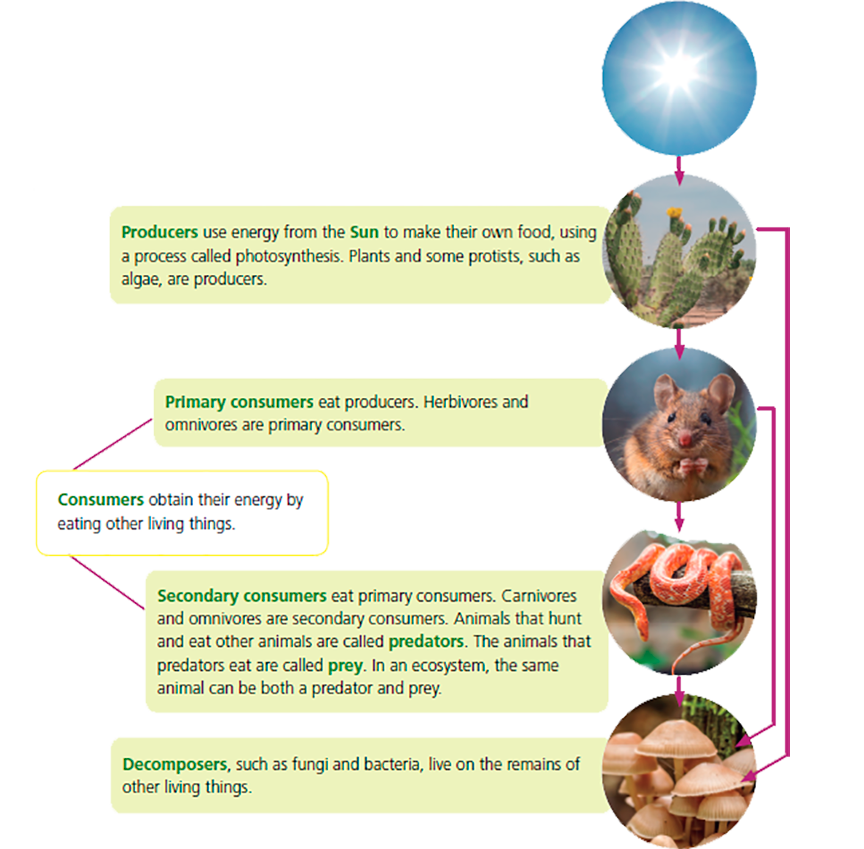
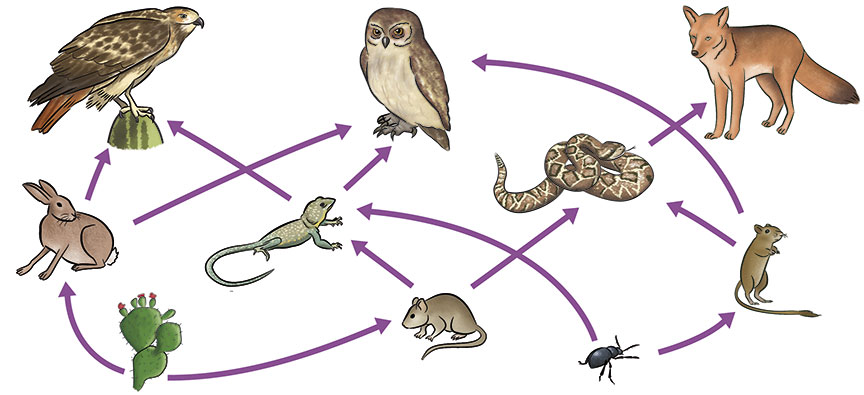
Most living things are part of more than one food chain. In an ecosystem, there can be lots of food chains. Most of these food chains are interconnected and are part of a food web.
Spain is one of the largest countries in Europe and has many different types of landscapes. There are also several different types of climate in Spain, as well as variation in relief. Landscape, climate and relief all determine what types of ecosystems we can find in Spain.
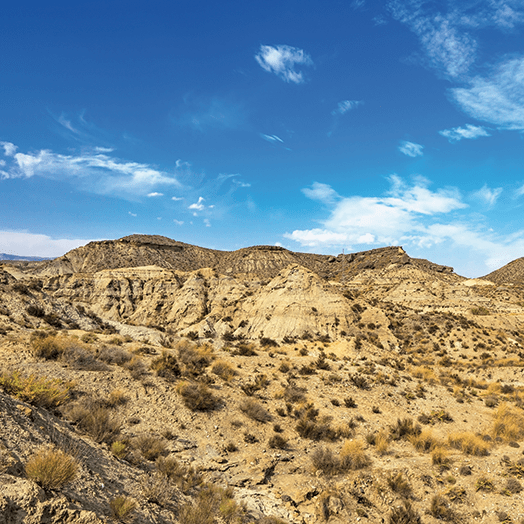
Desert ecosystems
Deserts are the driest and hottest places on Earth. However, at night they become very cold. The animals that live in this ecosystem are mainly nocturnal. Plants such as cacti and small bushes can survive on very little water. Cacti can also store water inside their thick stems. Did you know that the only desert in Europe is in Spain? It is called El Desierto de Tabernas.
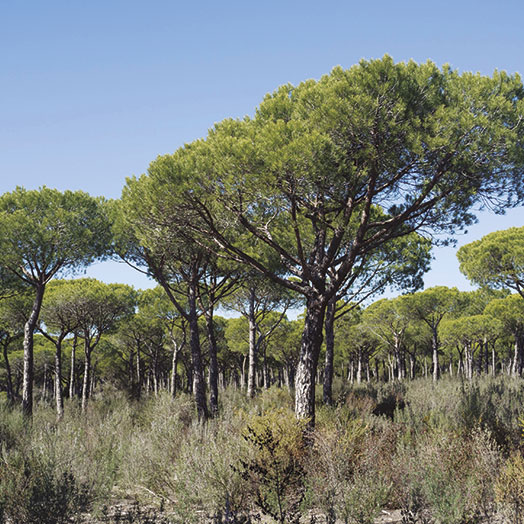
Forest ecosystems
Some forests are made up of deciduous trees that lose their leaves every winter. In colder areas, the forests are made up of evergreen or coniferous trees. Forests are home to all types of living things: animals, plants, fungi, protists and unicellular organisms. Mediterranean forest is found near the Mediterranean Sea.
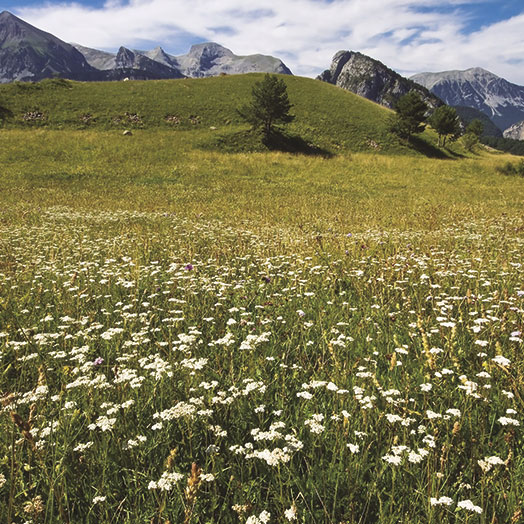
Grasslands
Grasslands are dominated by large areas of grass. They are found in areas where there is not enough rain to allow lots of trees to grow. There is, however, enough rain to support the growth of grass.
There are two types of grasslands: savannahs and temperate grasslands.
- Savannahs are warm all year round and home to animals such as elephants, giraffes, zebras, lions and rhinos.
- Temperate grasslands are located in colder climates. It is dry and windy and the grass is shorter. Animals that live here include bison, deer and rabbits.
Marine ecosystems
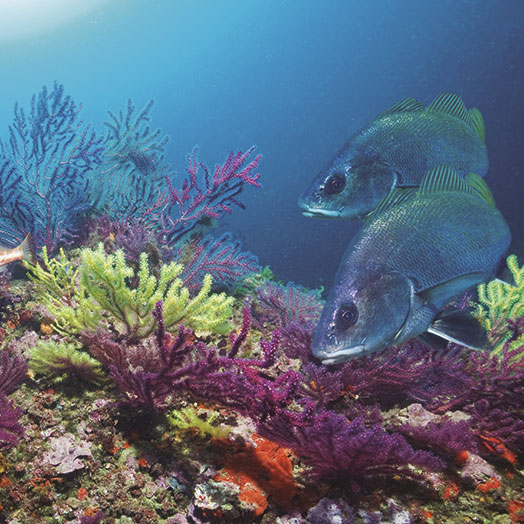
The largest ecosystem on Earth is the ocean. Coral reefs and the shoreline are smaller ecosystems within the ocean ecosystem. Coral reefs are one of the most diverse ecosystems – they are home to about 25% of all marine life on Earth. The shoreline is where the sea and the land meet. Animals and plants that live here have adapted to strong tides and waves.
Urban ecosystems
Humans have had an enormous impact on the planet and its ecosystems. In many cases, human activities have endangered natural ecosystems. They have, however, also created new ecosystems.
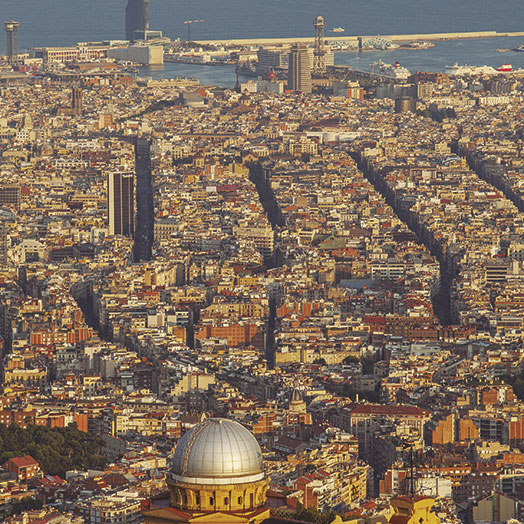
Urban ecosystems, such as cities and towns, are man-made or artificial. However, they contain both artifi cial and natural elements. There are many animal species that live in urban environments. Many invertebrates share our cities, as do pigeons, squirrels, rats, dogs and cats.
Cities are also home to plant species, many of which can be found inside parks. Look around you on your way to school. How many living things can you see?
Activities
An ecosystem includes all the living and things in a specific area and the interaction that occurs between them.All the plant life in an ecosystem is called the_________________ All the animal life in an ecosystem is called the_____________Organisms of the same species that live in the same area are called a population. When populations interact with each other, they form a _______________________________________are the driest and hottest ecosystems on Earth. ___________________ ecosystems can be made up of deciduous or evergreen trees. ___________________are dominated by large areas of grass and are found in areas where there isn’t enough rain for trees to grow.The largest ecosystem on Earth is the ________________ . _______________reefs are one of the most diverse ecosystems on Earth and are home to about 25% of all marine life.Cities and towns are examples of ________________ecosystems. They are man-made or artificial.
unit 5 Plants and Landscapes homework
Complete the study notes Natural and Social Sciences and send them to me by Monday 23rd March to be evaluated. Do your best with the help of your notebook. Enjoy your time with your family and stay home. You can send me the study notes finished to my email : antoniojose.flores@murciaeduca.es
Thank you

 Título del sitio web